
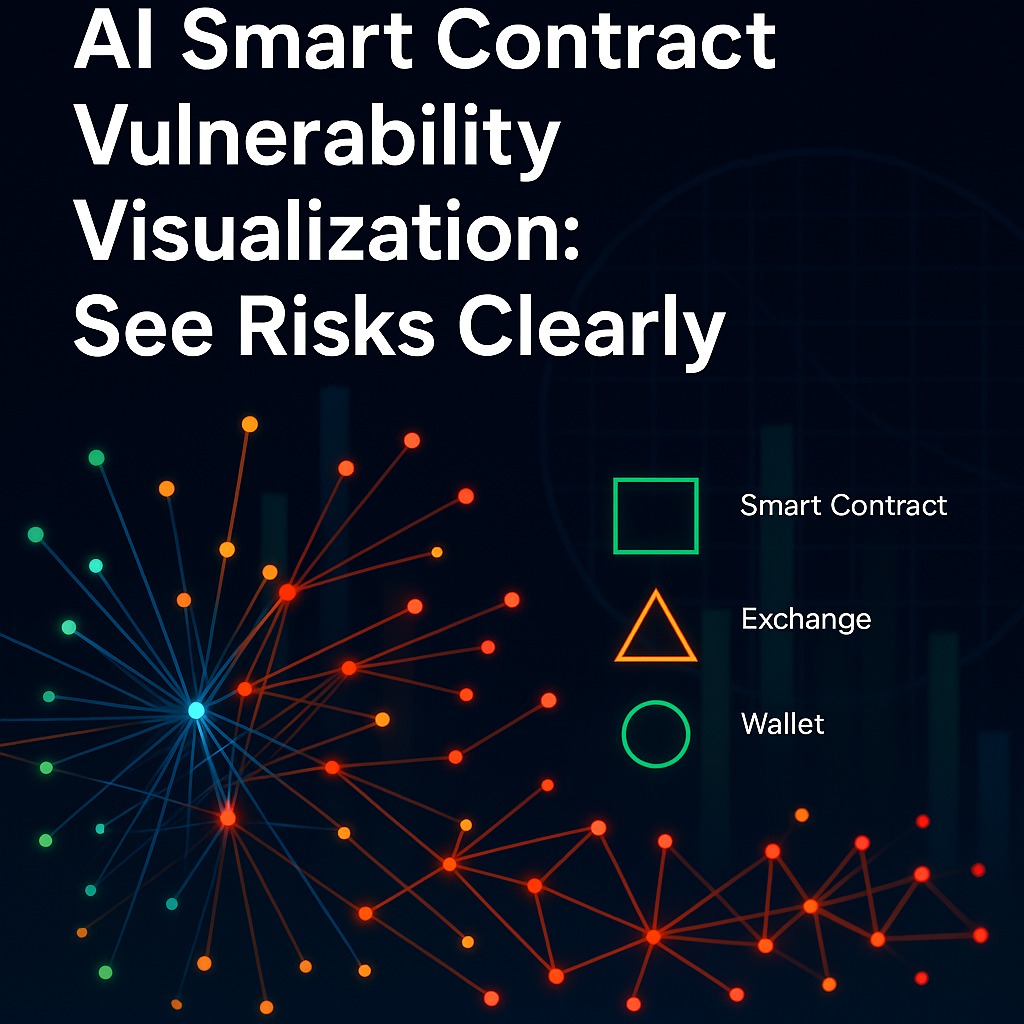
Crypto fraud prevention only works when people can see what smart contract code is doing quickly enough to stop security flaws before money moves. Visual trust infrastructure, combined with artificial intelligence and AI-powered security analysis, is now revolutionizing smart contract vulnerability detection by turning complex vulnerabilities into clear, human-readable signals.hindsight+2
Why smart contract risk is hard to see
Most people never see the executable code that governs DeFi pools, DAOs, bridges, or NFT marketplaces. Smart contracts are written for machines, and conventional methods like static code analysis, manual audits, and formal methods assume deep technical expertise and time that everyday users do not have. Even security teams struggle with the computational complexity of scanning thousands of contracts across chains using symbolic execution, control flow graphs, and dynamic analysis alone.linkedin+2
Traditional block explorers show code elements, function signatures, and token metrics in dense tables that hide patterns instead of surfacing them. When overflow bugs, negative values where only positive values make sense, or access control issues appear, they often remain buried under logs until an exploit makes the news. Visual trust shifts the focus from reading every line to spotting anomaly detection patterns—sudden outflows, strange off-chain dependencies, or unexpected permission changes—in seconds.hindsight+5
How AI and NLP unlock visual trust
Significant advancements in artificial intelligence and natural language processing (NLP) make it possible to interpret both smart contract code and related legal documents or documentation in ways that users can actually understand. Hindsight VIP combines AI algorithms, lexical analysis, and trained models to classify contracts, interpret risk signals, and encode them into shapes and colors inside Visual Explorer and Lighthouse.linkedin+1youtube
Sequence-aware models such as LSTM networks help detect reentrancy attacks and suspicious call sequences by watching event streams, while graph-based models map relationships between contracts, DAOs, exchanges, and wallets. AI-powered security analysis looks for emerging threats—like new exploit patterns or complex vulnerabilities that conventional methods missed—and then pushes those detections into the visual layer so users see risk as an orange or red contract, not just a warning buried in a report. This blend of AI and visualization keeps consistency between what machines see and what humans interpret, improving overall effectiveness without requiring users to read executable code.hindsight+2youtube
Visual Explorer and Shape Mode: from code elements to clear patterns
Visual Explorer and Shape Mode exist to bridge the gap between low-level analysis and high-level intuition. Behind the scenes, static code analysis and dynamic analysis identify risky code elements—unchecked arithmetic that could overflow, functions that accept negative values where they should not, or off‑chain dependencies that can be manipulated. Upstream formal methods and symbolic execution can feed additional insight about safe execution paths and control flow graph anomalies into trained models.youtubehindsight+2
On the surface, users see:
- Rings for wallets, squares for smart contracts, and triangles for exchanges, all color‑coded based on AI-powered security analysis.hindsightyoutube
- Anomaly detection cues, like sudden bursts of red flows from a single contract to multiple exchanges, indicating potential rug pulls or other emerging threats.linkedin+1
- Token metrics and behavioral summaries (e.g., how often a contract changes its access control settings, or how frequently it interacts with known-risk entities) expressed as simple visual indicators, not raw tables.hindsight+1
Instead of poring over code elements in an IDE, users read patterns: a red square feeding many orange rings is a contract to treat with caution, while a green, verified contract with stable flows signals relatively safe execution.hindsightyoutube
Lighthouse alerts: AI watching while you work
Lighthouse sits on top of this visual layer as continuous, AI‑driven monitoring for wallets, contracts, and DAOs. Where manual audits and conventional methods are often periodic, Lighthouse focuses on real-time anomaly detection so you do not need to stare at control flow graphs or static reports all day.hindsight+2
AI algorithms scan for:
- Reentrancy attacks, by tracking recursive call patterns and unusual event sequences across multiple transactions.hindsight+1
- Overflow and underflow conditions in token movements, like sudden spikes in balances or negative values in places that should only store positive values.linkedin
- Access control issues, such as new addresses gaining privilege over critical functions or changes to owner roles that deviate from past behavior.linkedin+1
- Off-chain dependencies that could weaken security, including contracts that rely heavily on external oracles or upgradable proxies without clear safeguards.hindsight+1
When trained models see something off, Lighthouse turns that into a clear, visual alert linked directly to the affected contract or wallet. Instead of manually chasing logs, users receive focused warnings that highlight where to look and why, reducing computational complexity on the human side and improving the effectiveness of their response. To experience this in practice, posts like Real-Time Crypto Scam Alerts with Lighthouse and How to Set Up Real-Time Crypto Alerts in 30 Seconds walk through setup and safe execution step by step.hindsight+3
Why visual, AI‑native safety beats traditional approaches
Conventional methods—manual audits, static code analysis, formal methods—are still vital, especially for high‑value protocols and legal documents governing DAOs or on‑chain governance. But they are slow, expensive, and often out of reach for smaller teams and individual users. They also struggle to keep pace with emerging threats that evolve faster than scheduled audits.hindsight+5
A visual, AI‑native approach improves:
- Speed: AI algorithms and LSTM networks can monitor many contracts simultaneously, surfacing anomalies far faster than manual audits alone.hindsight+1
- Coverage: Trained models can scan code elements, control flow graphs, and runtime behavior across thousands of smart contracts, catching patterns that would be invisible with only static checks.hindsight+1
- Usability: Visual trust infrastructure turns those insights into patterns anyone can read, dramatically lowering the cognitive load and making safe execution decisions more consistent across skill levels.youtubehindsight
This does not replace formal methods or symbolic execution; it augments them by making their findings usable for non-experts and giving security teams continuous telemetry between deep-dive reviews. That is where the future research directions are heading: hybrid systems that combine NLP, AI, and rigorous verification with interfaces that everyday users can actually navigate.linkedin+2
From complex vulnerabilities to confident decisions
The goal of visual trust and AI‑driven analysis is not to turn everyone into a security engineer; it is to make security outcomes predictable and safe for people who never touch smart contract code. By compressing static code analysis, anomaly detection, and complex vulnerability patterns into simple visual rules, Hindsight VIP helps users catch issues early and act with confidence.hindsight+2youtube
- DeFi traders can watch token metrics and flows instead of reading raw call traces.hindsight+1
- DAO participants can see whether treasury contracts behave consistently or if new, risky code elements have appeared.hindsight+1
- Builders can rely on AI-powered security analysis and sandbox environments during testing to explore how their executable code behaves under stress before deploying.linkedin+1
For readers of this hub, the most important step is to let AI and visualization work on your behalf: See contract risks clearly and let Lighthouse watch for emerging threats—start your free trial so that safe execution and effective fraud prevention become part of your everyday workflow, not a once‑a‑quarter audit project.hindsight+1