
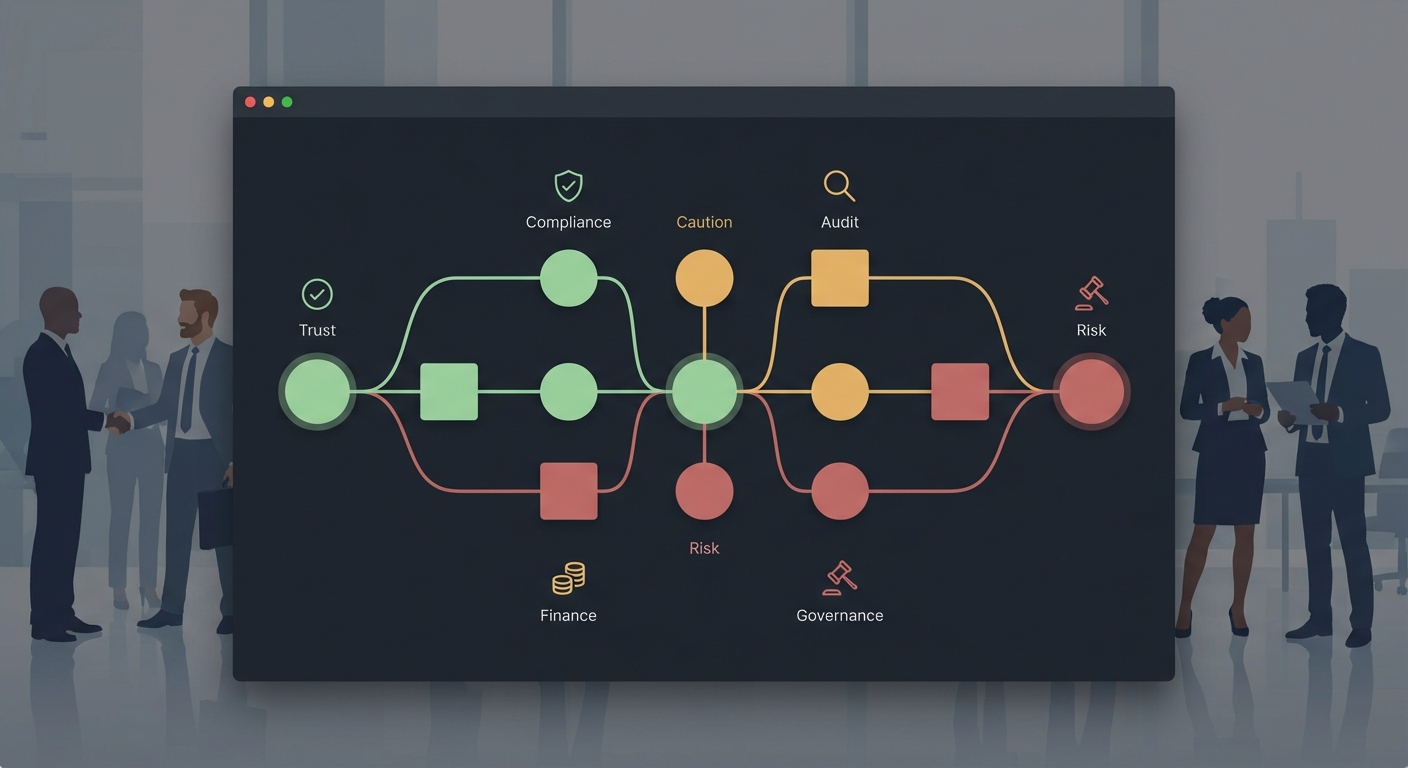
What if your blockchain systems could speak in pictures, not logs and tables. That is the promise of universal visual design applied to enterprise blockchain analytics. It turns raw transaction data into intuitive visuals that many users can understand and act on. For enterprises, this is not a design preference. It is an operational requirement.
Blockchain has moved from experimentation to core infrastructure. Over 80 percent of large enterprises now run blockchain initiatives, yet most organizations still rely on analysts to translate on chain data into spreadsheets for compliance, audits, treasury, and reporting . The problem is not transparency. The problem is readability.
Why inclusion matters for enterprise blockchain
Enterprise teams are broad. They include compliance officers, auditors, CFOs, legal teams, risk managers, and operations staff. Most are not blockchain specialists. Traditional analytics tools assume deep technical knowledge. They expose raw hashes, addresses, and multi hop flows. This creates potential usability issues across the organization.
When tools are hard to read, teams delay decisions or avoid using the data at all. Compliance reviews stretch from minutes into hours. Audit trails require manual reconstruction. Treasury teams run parallel systems because they cannot trust what they see on chain .
Inclusive blockchain analytics solves this problem. It gives every role access to the same source of truth through a single design system. One intuitive interface. Multiple ways to understand the data. A larger potential user base inside the enterprise.
Universal visual design in an enterprise context
Universal visual design is a design approach that aims to make digital products usable by the greatest extent possible, by the largest possible audience, without specialized design or role specific retraining. In practice, it helps teams design products that are easier to operate under real world constraints.
In enterprise analytics, this means a single design that supports a broad range of users with different sensory abilities, technical backgrounds, and job functions. It replaces specialized design built for analysts with intuitive interfaces designed for decision makers.
Core universal design principles matter here:
Equitable use. Compliance, finance, and legal teams see the same data with role appropriate views.
Simple and intuitive presentation. Visual composition reduces cognitive load.
Perceptible information. Meaning is conveyed through shape, color, and position, not dense text.
Flexibility in use. Users can drill down or stay high level.
Tolerance for error. Visual warnings reduce costly mistakes.
Appropriate size and spacing. Enough size for labels, manipulation area, and clear typography.
These principles appear in a universal design guidebook tradition and in accessibility standards. When applied to blockchain analytics, they move from theory to operational impact.
The enterprise barriers universal design addresses
Enterprises face consistent challenges when working with blockchain data:
Technical language. Terms like nonce, gas, and contract call overwhelm non specialists.
Accessibility gaps. Many platforms fail basic accessibility standards, which creates legal requirements risk for regulated organizations . Teams also struggle to keep a website accessible for every stakeholder who needs to review on chain activity.
Cognitive overload. Dense charts and node graphs hide what matters.
Fragmented workflows. Teams export data into spreadsheets and presentations to explain it internally.
Compliance risk. Manual interpretation increases error rates and audit exposure.
Universal design addresses these challenges at the design process level, not as an afterthought, and it strengthens access across roles.
How universal visual design works in enterprise analytics
Universal visual design transforms blockchain analytics into visual infrastructure. It changes how products are built and how teams interact with data throughout development.
Visual systems replace raw logs
Shapes represent entities such as wallets and contracts. Lines represent relationships and transaction paths. Colors communicate risk, trust, and status in real time. This visual grammar allows many users to read the same system without technical translation .
Progressive disclosure supports multiple roles
An executive sees a high level flow of funds. A compliance officer expands the same view to inspect transaction paths. An auditor exports a human readable trail. One system supports multiple ways to work.
Accessibility features become default
Keyboard accessibility supports users who cannot rely on precise mouse control. Adjustable contrast and typography support users with visual impairments. Screen reader friendly descriptions support compliance with accessibility standards and internal policy requirements, helping keep digital products usable across departments.
Design systems reduce training and risk
A shared visual language across dashboards, APIs, and reports builds trust. When teams recognize the same icons and patterns, they move faster and make fewer mistakes. This reduces onboarding time and improves adoption across departments, and drives increased accessibility as the system scales.
Why visual literacy matters for enterprises
Universal design and visual literacy reinforce each other. Visual literacy is the ability to read and reason with visual information. In enterprise settings, it reduces reliance on specialists.
When teams understand visual cues, they no longer need analysts to explain every transaction. They can ask better questions. They can flag issues earlier. They can communicate findings clearly to regulators and leadership.
Enterprises that invest in visual literacy reduce internal friction. They align teams around shared dashboards and reports. They shorten review cycles and improve governance outcomes.
Enterprise use cases where universal design delivers impact
Compliance and AML monitoring
Traditional compliance reviews take eight to twelve hours per flagged transaction. Visual analytics reduce this to minutes by making multi hop flows readable at a glance . Color coded risk signals and perceptible information guide reviewers to what matters.
Audit and reporting
Auditors need clear provenance. Universal design turns cryptographic records into readable audit trails. This reduces back and forth and lowers audit costs.
Treasury management
CFOs need to understand asset movement across chains. Visual dashboards show inflows, outflows, and exposure in seconds instead of spreadsheets and reconciliations .
Supply chain and ESG reporting
Enterprises use blockchain for custody chains and provenance. Visual analytics present this data in regulator ready formats. This supports ESG reporting and external disclosures.
Why enterprises adopt visual first infrastructure
The market data is clear. Enterprise blockchain adoption is accelerating, but comprehension is lagging. Sixty percent of organizations still maintain parallel systems because teams cannot interpret blockchain data directly .
Visual first platforms fill this gap. They turn blockchain from a specialist tool into shared infrastructure. They support increased accessibility across departments and roles. They reduce operational risk and cost.
Hindsight VIP as an enterprise example
Hindsight VIP illustrates how universal visual design (ud) scales to enterprise needs. It positions visual analytics as infrastructure, not a dashboard. Shapes, lines, and colors translate raw data into maps of money flow and risk that non technical teams can use .
The platform supports enterprise deployment models including APIs, white label explorers, and on premises systems for regulated environments. This allows enterprises to embed visual trust directly into existing workflows rather than adding another tool .
This approach aligns with how enterprises design products today. It favors integration, standards, and compliance over isolated tools, so products fit real operational needs.
Design, regulation, and shared standards
As enterprises expand blockchain usage, universal design intersects with policy and regulation.
Federal agencies and regulators increasingly expect systems to meet accessibility standards. Platforms that fail these standards create legal requirements risk. Universal design reduces this exposure by aligning with established guidelines.
Industry collaboration also matters. Shared guidelines, design systems, and open standards reduce fragmentation. They make it easier for enterprises to evaluate products and ensure compliance.
Designers, developers, and compliance teams must work together during development, not after deployment. User research and user testing across roles identifies potential usability issues early. This improves outcomes and reduces rework.
The future of inclusive enterprise analytics
The next phase of blockchain adoption depends on comprehension. Enterprises already invest in infrastructure. The missing piece is intuitive access.
Universal visual design makes that access possible. It supports a single design that serves many users. It replaces specialized design with inclusive systems. It transforms blockchain analytics into digital products that enterprises can trust and scale.
As organizations demand clarity, visual trust becomes a competitive requirement. Platforms that meet this need will define the standard for enterprise blockchain analytics.
Call to action
As an introduction to inclusive analytics strategy: If you design products, manage compliance, or oversee blockchain initiatives, prioritize universal design principles from the start. Focus on access, perceptible information, and an intuitive interface. The impact reaches every team.
Explore how visual trust infrastructure supports enterprise adoption in related posts from the Hindsight VIP blog, including Visual Crypto Analysis Explained and Empowering Non Technical Teams Through Blockchain Accessibility Education. Experience inclusive design. Subscribe and see how universal visual design changes how your organization understands blockchain.
Turn complex on chain data into clear visuals everyone on your team can read and use. Improve compliance, audit readiness, treasury insight, and risk reporting with visual analytics built for business users, not just specialists. See how Hindsight VIP’s enterprise solutions bring visual trust into your workflows.
Visit https://hindsight.vip/enterprise to explore enterprise blockchain analytics made simple.