
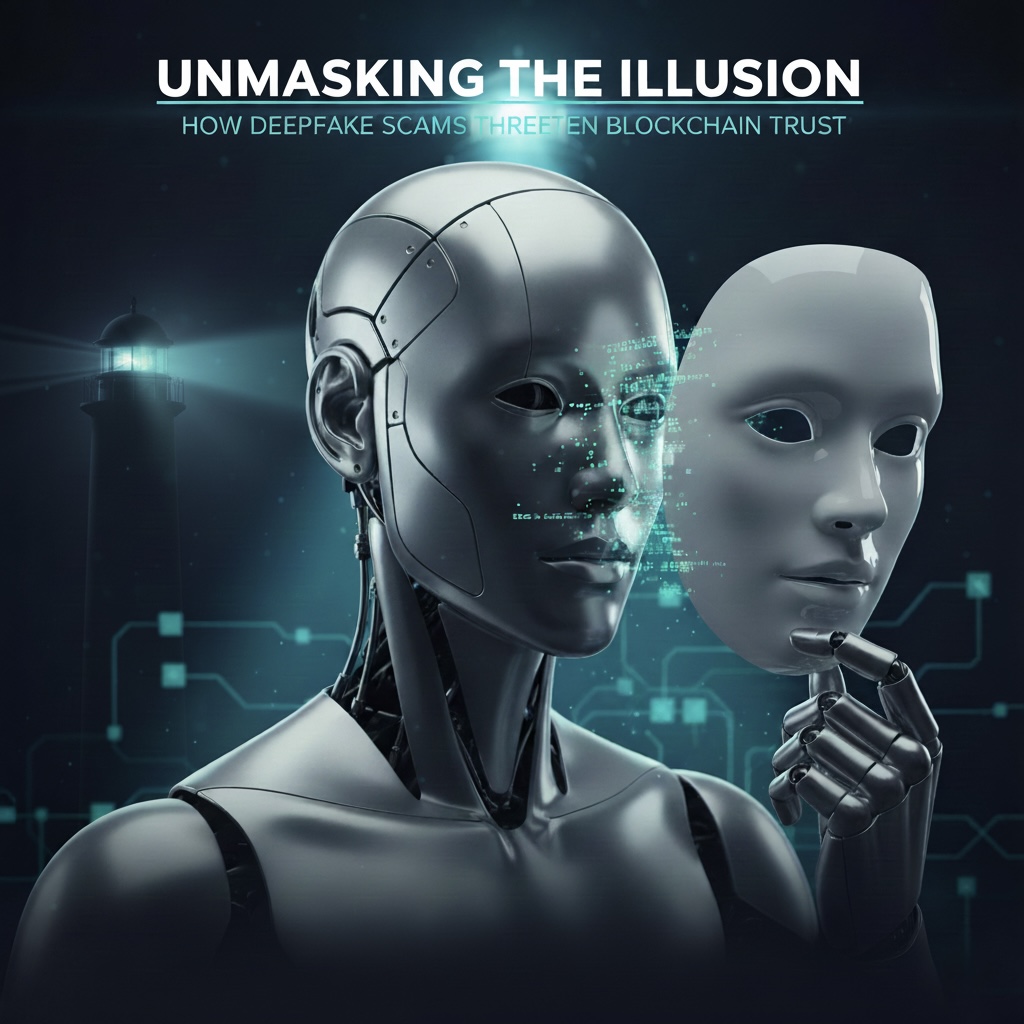
Sure, here is the article with improved SEO optimization:
In May 2024, investigators uncovered an AI-powered crypto scam that used a voice-cloning deepfake of a legitimate executive to authorize a $25 million transfer—what looked like a routine transaction was actually a precision-engineered deception that weaponized generative AI to impersonate trust itself. The executive never made the call, the voice was synthetic, and the authorization was fraudulent, but the money was gone before anyone realized what had happened.
This is no longer an outlier; it is becoming the new normal as AI-enabled scams shift from crude phishing to hyper-realistic deepfake videos, cloned voices, and synthetic personas that target even security-conscious organizations. As blockchain moves deeper into mainstream finance, these threats are finding ways to undermine decentralization and transparency at the human layer, turning trust into the primary attack surface.
Want real-time alerts before AI-powered scams touch your wallets or DAOs? Get Lighthouse threat alerts free for 30 days →
The Next Frontier of Deception
Understanding the Deepfake Threat
Deepfakes use generative AI to synthesize highly realistic video, audio, and text so it appears that trusted figures—founders, executives, influencers, or regulators—are saying or doing things they never did. In crypto and Web3, these assets spread quickly across Slack, Discord, Telegram, X, Zoom, and email, where they can be used to:
- Impersonate founders on community calls or AMAs to redirect funds
- Forge “official” announcements for token sales, airdrops, or governance proposals
- Pressure teams into wiring funds or signing transactions under fake executive instructions
Because blockchain interactions are already pseudonymous and high-speed, convincing deepfakes can slot into existing communication patterns and hijack trust before on-chain data ever looks suspicious.
For a broader look at the trust crisis around scams and misinformation, see The Fraud Crisis in Crypto: Why Seeing Clearly Is the Key to Trust.

How Deepfakes Work: The Technical Reality
Most modern deepfakes rely on generative adversarial networks (GANs) or similar architectures where one neural network generates synthetic content and another tries to detect it. Through many training cycles, the generator learns to produce video, audio, or images that are indistinguishable from real footage.
Off‑the‑shelf or “AI as a Service” tools now let non-experts:
- Clone a voice from a few seconds of audio
- Swap faces in existing clips in near real time
- Generate synthetic “executives” or influencers that never existed
- Mimic writing styles in email, chat, and social media posts
Impact on Blockchain Security
While on-chain data is transparent, nearly every meaningful decision in Web3—treasury moves, governance votes, token launches—still begins with human communication. Deepfakes exploit that human layer:
- Identity theft and direct fraud: Fake founder AMAs, forged “emergency” calls, or impersonated CFOs can push teams to sign multi-sig transactions or send assets to attacker-controlled wallets.
- DAO and governance manipulation: A deepfaked video of a core contributor urging a “yes” vote on a proposal can sway token holders, especially in communities where voices and faces carry more weight than code reviews.
- Financial grooming (pig-butchering) scams: Long-running romance or mentorship scams now use AI chatbots and voice cloning to build months of rapport before directing victims into fraudulent DeFi or exchange schemes.
Beyond direct losses, each successful incident erodes community confidence, stalls adoption, and invites heavier regulatory scrutiny.
To understand how similar human-layer risks show up in DeFi, see Synthetix and Synthetic Assets: How On-Chain Derivatives Are Changing DeFi in 2025.Impact on Blockchain Security
The blockchain ecosystem thrives on transparent code and distributed consensus, but these qualities can also be exploited when users rely on visual or auditory cues to make trust decisions. The introduction of deepfakes into this space threatens every layer of decentralized interaction:
- Identity Theft and Financial Fraud
By impersonating developers, founders, or project leads, deepfakes enable identity theft and direct crypto fraud. Fraudsters can host fake AMAs, send convincing text messages, or appear in video calls, persuading users to move assets to malicious wallets. - Manipulation of DAOs and Governance
In decentralized autonomous organizations (DAOs), votes are often influenced by recognizable voices or faces. A deepfake video of a founding member urging a vote can skew community decisions and result in asset reallocation or chain manipulation. - Financial Grooming Scams
Assisted pig-butchering scams—long-term emotional and financial grooming operations—now employ AI chatbots and deepfake profiles to simulate relationships. Combined with voice-cloning scams, these tactics drive victims toward wire transfers or crypto wallets controlled by cybercriminals. - Reputational Damage
Once a real-life scam circulates online, it erodes community confidence. Even when debunked, the lingering perception of vulnerability can deter new investors, stall project momentum, and invite scrutiny from regulators and government investigators.

Real-World Deepfake Crypto Scams
Investigations and public reports already surface multiple patterns:
- Executive voice clones: Cases where finance teams received realistic audio instructions from “executives” authorizing large transfers, only to later learn the calls were generated by AI.
- Fake Elon Musk Bitcoin giveaways: Deepfaked live streams and clips promoted “send BTC and get double back” scams, using cloned voice and video overlays to mimic real interviews and presentations.
- Synthetic CEO conference calls: Corporate victims have wired six-figure sums after participating in conference calls with what they believed were parent-company leaders, only for forensics to show the audio was entirely synthetic.
Each example shows that the most effective AI attacks do not exploit smart contracts directly—they exploit the people who control the keys.
For practical defense against fast-moving scams, see Real-Time Crypto Scam Alerts with Lighthouse: Staying Safe in Fast-Moving Markets.
Mitigation Strategies: Fighting AI With AI (and Better Process)
Technical defenses and good process design can dramatically reduce AI scam impact:
- AI-assisted detection: Use tools that analyze metadata, micro‑expressions, and audio artifacts to flag likely deepfakes before they spread widely.
- Multi-layer authentication:
- Require hardware wallet signatures or multi-sig approvals for high‑value transfers.
- Implement time delays and secondary confirmations for large on-chain moves.
- Confirm sensitive requests out of band (for example, a known-safe channel or in person).
Education and playbooks: Train teams and communities to question urgent, high‑pressure requests, especially when they come via new channels or slightly unusual formats.
Lighthouse extends these protections on-chain by watching wallet behavior, transaction patterns, and contract deployments, then issuing alerts when activity matches known fraud signatures or deviates sharply from normal behavior.
Want automated “tripwires” for wallet and contract behavior? Protect against AI scams with Lighthouse alerts →hindsight
Visual Trust Infrastructure: Seeing Through Synthetic Noise
Even the best AI detectors will miss some deepfakes, which is why Hindsight VIP focuses on Visual Trust Infrastructure—turning raw blockchain data into human-readable visuals that highlight anomalies.
- Shape Mode™: Wallets, contracts, and exchanges are rendered as distinct shapes and colors, making abnormal flows or relationships stand out at a glance instead of hiding in long hash lists.
- Lighthouse Alerts: When wallets suddenly receive funds from flagged entities, interact with suspicious new contracts, or show behaviors consistent with scam campaigns, Lighthouse notifies users before they sign or approve any cryptocurrency transactions.
- Samaritan Network: Community reports about scam addresses, fake airdrops, and compromised contracts are aggregated so one person’s discovery protects many others.
This visual layer reduces cognitive load: users do not need to be protocol experts to see that “this flow looks wrong” or “this contract is risky.”
For a full breakdown of how visual grammar improves safety, see Seeing Blockchain the Human Way: Why Visual Trust Beats Text-Only Explorers.hindsight
Hindsight VIP in Action: From Red Flags to Saved Funds
Early users of Hindsight VIP and Lighthouse have already avoided AI-adjacent scams through visual and alert-based cues:
- Fake airdrop prevention: A user received a convincing “airdrop” notice tied to a known project; Visual Explorer showed the contract was newly deployed and already flagged by community reports, so they refused to connect their wallet.
- DAO vote interference: A deepfaked founder video circulated inside a DAO, urging support for a treasury proposal; Lighthouse highlighted that the target wallet was linked to previous scam activity and that the communication channel was new, so the DAO paused the vote and investigated.
In both cases, users did not have to parse raw bytecode or read long reports; they simply followed clear visual and alert signals.****

Government and Industry Response
Regulators and industry bodies are starting to treat deepfake fraud as both a consumer protection and systemic risk issue:
- Proposals for synthetic media labeling and authenticity proofs so users can confirm whether a video or audio clip has an attested origin.
- Pressure on AI service providers to include stronger abuse monitoring and rate-limiting mechanisms.
- Calls for cross-border enforcement against organized scam operations exploiting deepfakes to move large sums through crypto rails.
On the industry side, blockchain and security teams are collaborating on:
- Shared threat intelligence feeds for known scam wallets, campaigns, and deepfake patterns.
- Best-practice standards for multi-sig, time locks, and human-in-the-loop verification on large transactions.
- Integrations between visual explorers, alert systems like Lighthouse, and DAO governance tooling.
The Hindsight Perspective: Trust as a Visual Battleground
Hindsight VIP’s core stance is that trust in Web3 will increasingly be won or lost on what people can see and understand, not just on what the protocol guarantees. As generative AI accelerates, platforms must evolve from being technically secure to being visually trustworthy for non-experts. hindsight
By combining:
- AI-powered detection to catch anomalies
- Visual Trust Infrastructure to make risk obvious
- Community-powered reporting through networks like Samaritan
Q: How can I quickly tell if a crypto-related video or call might be a deepfake?
Red flags include slightly unnatural facial movements, off-sync lip motion, inconsistent lighting around the face, and audio that sounds flattened or “too clean” compared to past recordings. For any message involving money, wallet access, or governance decisions, verify via a known-safe channel (direct call, in-person, or previously established secure chat) and cross-check wallet or contract details in Hindsight’s Visual Explorer before acting.
Q: Can Lighthouse actually detect AI-powered crypto scams before I lose funds?
Lighthouse monitors wallet behavior, contract deployments, and transaction patterns across chains, then fires alerts when activity matches known fraud signatures or diverges sharply from your normal patterns. This means you get real-time warnings when a wallet you are about to pay is linked to prior scams, a contract is newly deployed and unvetted, or a “trusted” address suddenly starts behaving like a drain or mixer.
Q: What are the best practices for teams to prevent deepfake-based treasury or DAO attacks?
Teams should enforce multi-sig and hardware-wallet approvals for all high-value moves, require out-of-band confirmation (for example, a second channel or code phrase) for urgent transfer requests, and use time locks on large treasury transactions so suspicious instructions can be reviewed. Pairing these controls with Lighthouse alerts on key treasury wallets and governance contracts helps catch unusual flows or proposal-linked movements before funds are irreversibly moved.
Q: How does Visual Trust Infrastructure help against deepfakes if the fake looks “perfect”?
Even when a video or voice is convincing, deepfake scammers still have to move value through wallets and contracts on-chain, and that behavior is difficult to fake over time. Visual Trust Infrastructure surfaces those underlying flows—showing new, untrusted contracts, abnormal token routes, and links to flagged wallets—so users can ignore “who” appears in a clip and focus on whether the on-chain story makes sense.
Protect against AI scams now: https://hindsight.vip/lighthouse